Skip to content
18+ · Free play · Just for fun · No real money · Nothing to buy · Tints have no real-world value
VISITOR NOTICE18+ Colour Atrium is free entertainment for adults in the UK. Tints are free, can't be bought and are worth nothing.

How pieces are chosen · About the atrium · Accessibility

i · Info for this page

What would you like to know?

How do I know the pieces are fair?

The server chooses each tile or number independently of your studio. You can compare the result on screen with its filed reference. Read more →

What do editions change?

An edition changes the size of your daily print. It follows the Tints you play and has no effect on a piece. Read more →

What is a piece reference?

A reference beginning PIECE- identifies one round. Find it beside the controls or on its tile in My Studio. Read more →

How does a row count?

Read across three tiles. One colour makes a colour row, one shape makes a shape row, and three identical tiles make a perfect row counted once. Read more →

I need a pause

The Quiet Room has a gallery timer, studio closures and a minute of quiet. Read more →

Send the team a note

File a note at the information desk. Include a piece reference if the question is about a round. Read more →

All answers → 04 Info
04

Where a piece comes from

Every piece is picked by our server before you see it. Here is the whole process, step by step.

Catalogue notes · Process
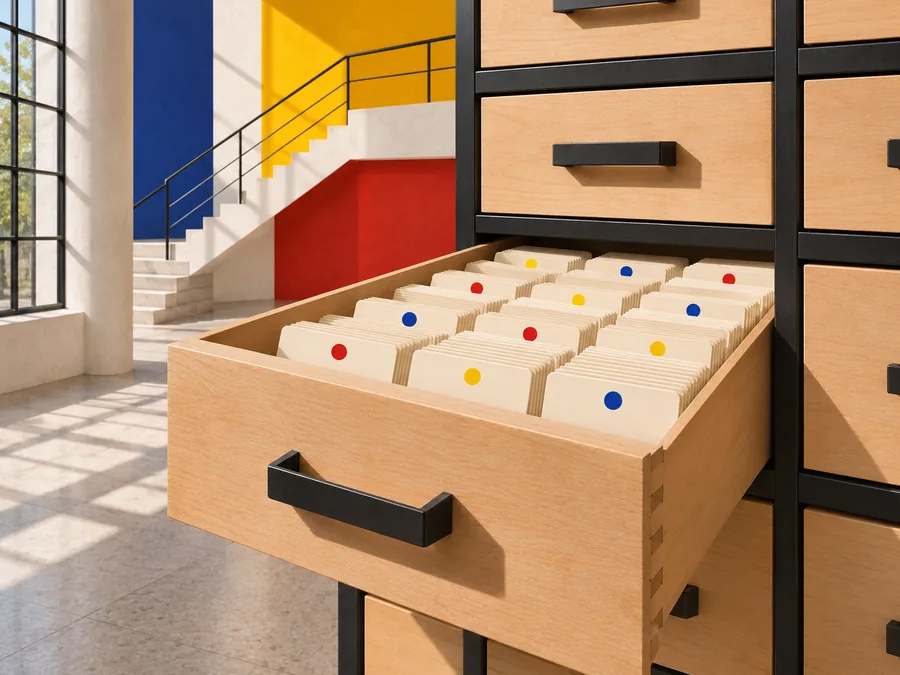
Plate 6 — Files in the colour archive

From the wall to the file

  1. Choose your amount and, at Colour Board, your numbers.
  2. Press Paint or Draw. The server checks your studio and the amount.
  3. It makes the piece, calculates whole Tints and records the result together with its reference.
  4. Your screen displays the piece supplied by the server.

What makes no difference

The time of day, the speed of your press, your balance, edition, daily print and visiting habits never affect a result.

Your piece reference

Look for the five characters after PIECE-. The collection keeps this reference with the shapes or numbers, the amount and the Tints that came back.

One work at a time

Primary Rows

Four colours, three shapes and three rows — the steadiest room in the building.

Spectrum Rows

Five colours and four shapes: rows come together less often and in bigger steps.

Colour Board

Pick one to four numbers; the server draws eight from thirty.

WorkMediumSomething comes back…
Primary RowsShape and colour, 3 × 3Something comes back about 2 rounds in 5
Spectrum RowsShape and colour, 3 × 3Something comes back about 1 round in 4
Colour BoardNumbers on a 30-square boardDepends on how many numbers you pick

Calm and lively

Primary Rows puts the small steps closer together. Spectrum Rows uses an extra colour and shape, so a counted row is less frequent. At Colour Board the number of squares you choose sets the pattern.